Teen STD Statistics
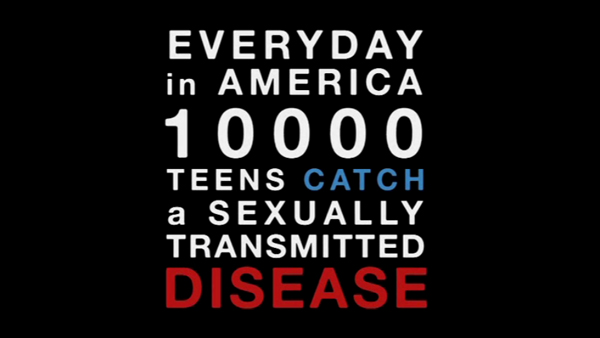
When it comes to sexually transmitted diseases (STDs), the United States offers woefully inadequate education. The proof is in the fact that the Centers for Disease Control (CDC) reports that 19 million new STD infections occur every year (February 2013 new information indicates this number is now 20 million). And, even more alarming, is that nearly 50 percent of these new cases happen to young people between the ages of 15 and 24. Not only that, but the American Social Health Association (ASHA) reports that half of all new HIV infections occur in teenagers. It is apparent that many of the current and alarming STD statistics could be reduced with proper education.
Syphilis, a sexually transmitted disease that was virtually wiped out (or at least under tight control) as been making a comeback, resulting in an increase in cases each of the last six years, reports the Centers for Disease Control. And while Gonorrhea has leveled off, there is an indication that it could be creeping back into the population.
Chlamydia is another STD that is making a comeback in the population. ASHA reports that it is most prevalent in young people aged 15-24. According to the CDC, from 2005 to 2006 reported cases of Chlamydia climbed from 976,445 to 1,030,911. In 2011, 1,412,791 cases of Chlamydia were reported. However, health care professionals worry that the rates are probably higher, perhaps as high as 2.8 million new cases a year. The problem is that Chlamydia is one of the most under-diagnosed diseases in the country. And young women are the hardest hit by the re-emergence of Chlamydia. Teenage girls have a Chlamydia rate three times higher than teenage boys, reports the CDC.
One of the biggest problems with the increase in STDs among teenagers is due to the lack of education. Abstinence-only education, reports Planned Parenthood, does not address measures one can take to protect oneself during sex. Also, instead of providing practical and actionable information about the importance of being screened for STDs, abstinence-only education ignores STDs, except to point out that they are bad, and that complete abstinence is the only full-proof way to avoid them.
While this is true, many teenagers are sexually active (about 2/3 of seniors in high school have had sex). Abstinence-only education does not address this fact, and it does not educate teenagers that oral sex can transmit sexually transmitted diseases. Many teens think that remaining “technical” virgins and engaging in oral sex, but not intercourse, can protect them from STDs.
The American Social Health Association reports that less than half of teenagers in the U.S. have had discussions about sexual health and STDs during health visits and in schools. Additionally, parents are reluctant and embarrassed to talk about this information. This is contributing in large part to the STD statistics that we see. ASHA also reports that screening guidelines for STDs are not being followed, and that significantly less than half of eligible teen girls have been screened for Chlamydia.
The best defense against STDs is knowledge. Studies have shown that teenagers who are equipped with the education they need to protect themselves are more likely to engage in protective behaviors during sex.